Living with chronic pain can feel like walking through a maze of misinformation. Let’s clear the path by busting three common myths and showing how movement can help you reclaim your life.
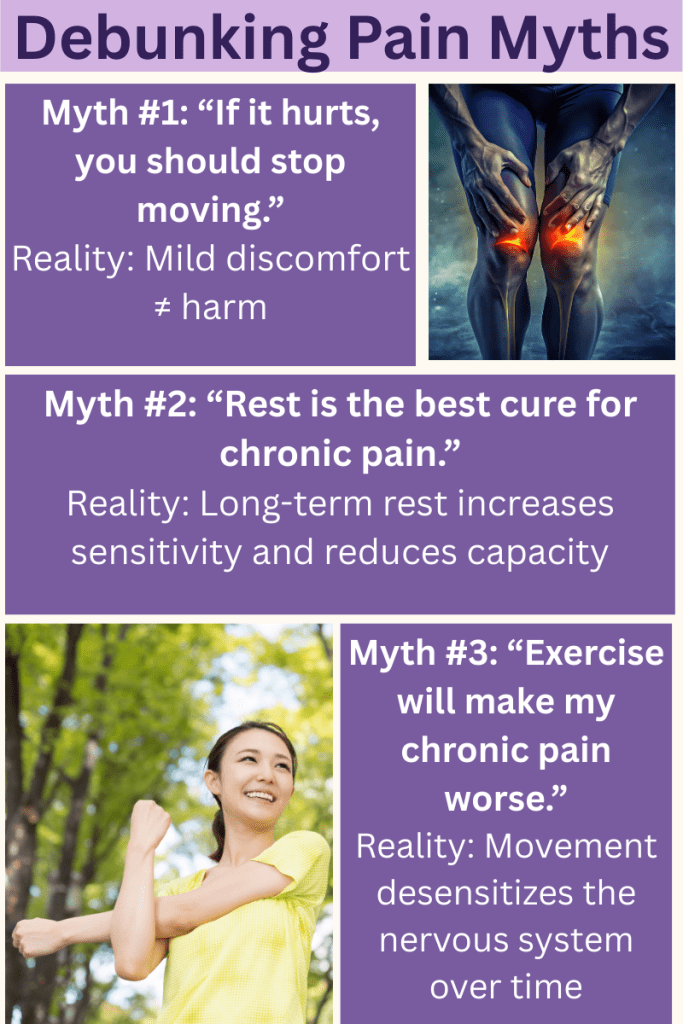
Myth #1: “If it hurts, you should stop moving.”
Reality: Mild discomfort ≠ harm
In many chronic pain conditions, peripheral sensitization occurs—your peripheral nerves become overly reactive. This means things that shouldn’t hurt (like a light breeze) can feel painful, and mildly painful things can feel severe.
But here’s the key: the mild discomfort of exercise is not the same as peripheral sensitization. In fact, avoiding movement makes sensitization worse. Gentle, graded exercise helps calm the nervous system and improve function. That’s why physical therapy and simple activities like short walks can reduce pain over time.
Myth #2: “Rest is the best cure for chronic pain.”
Reality: Long-term rest increases sensitivity and reduces capacity
While rest is essential for acute injuries, chronic pain is different. Inactivity makes the nervous system more reactive and weakens muscles. Graded exercise helps in two ways:
- It teaches your body to tolerate movement, reducing sensitivity.
- It strengthens muscles and activates pathways that regulate pain signals.
Bottom line: chronic pain improves with movement, not prolonged rest.
Myth #3: “Exercise will make my chronic pain worse.”
Reality: Movement desensitizes the nervous system over time
Exercise triggers the release of endogenous opioids—your body’s natural painkillers. These chemicals help calm pain pathways. The magic isn’t in intensity; it’s in consistency. Even a short walk can activate these systems. Over time, repeated gentle movement dampens pain and builds resilience.
Getting Started with Movement When You Have Chronic Pain
- Start Way Below Your Limit
If all you can do is walk for 5 minutes, start there. Easy movement boosts confidence and activates pain-calming systems. - Consistency Beats Intensity
Pushing too hard can trigger flares. Small, steady steps teach your brain and body that movement is safe. - Use the 10% Rule
Increase only one variable—speed, duration, or weight—by about 10% per week. - Look for Short Recovery
Mild soreness for 24–48 hours is normal. Longer pain signals a flare; scale back next time. - Expect Flares and Have a Plan
Flares happen—due to stress, weather, or overdoing it. On flare days, focus on gentle movement, stretching, or relaxation. Resume slowly when symptoms settle. - Track Function, Not Pain
Progress isn’t just less pain—it’s walking farther, playing with your kids, or enjoying hobbies. Track these wins weekly, not daily, and look for long-term trends.
The Big Picture
Movement isn’t the enemy—it’s medicine. Start small, stay consistent, and celebrate functional gains. Over time, you’ll retrain your nervous system and reclaim the activities that make life meaningful.
 DocNessMonster
Leave a comment